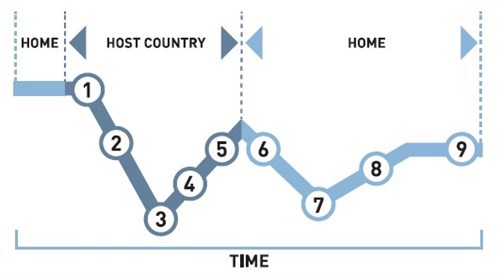
The term “culture shock” was introduced for the first time in 1958 to describe the anxiety produced when a person moves to a completely new environment. This term expresses the lack of direction, the feeling of not knowing what to do or how to do things in a new environment, and not knowing what is appropriate or inappropriate. The feeling of culture shock generally sets in after the first few weeks of coming to a new place. We can describe culture shock as the physical and emotional discomfort one suffers when coming to live in another country or a place different from one’s place of origin. Often, the way we lived before is not accepted as or considered as normal in the new place. Everything is different, for example, not speaking the language, not knowing how to use banking machines, not knowing how to use the telephone and so forth.
The symptoms of culture shock can appear at different times. Although one cannot experience real pain from culture shock, it is an opportunity for redefining one’s life objectives. It is a great opportunity for learning and acquiring new perspectives. Culture shock can make one develop a better understanding of oneself and stimulate personal creativity.
Ways to Survive Culture Shock
Remember that you are the visitor; you are there to learn about a new culture, not change it. Prior to leaving the U.S., spend some time finding out about the country you will visit.
Think about:
Culture Shock Pattern